

From Religious Harm to Healing
Themes of recovery
Every person and circumstance is different
Here are a few of the most common themes when healing from religious harm
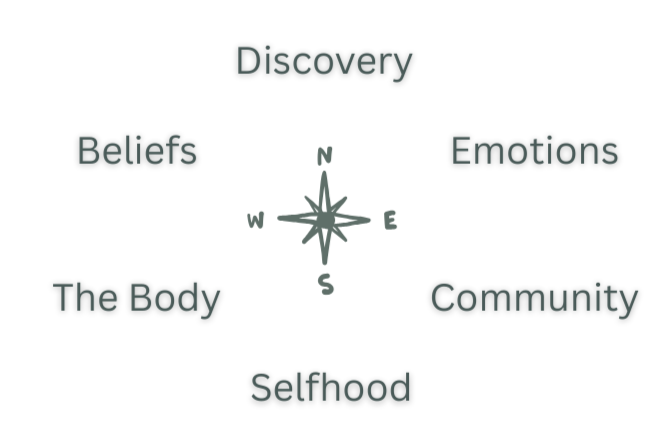
Discovery is the process of expanding knowledge. Examples include exploring the negative, hidden parts of the religious system, deconstruction, recovery, and learning alternate views of spirituality.
Beliefs includes core messages about your personhood- value and safety. They also include rebuilding worldviews, ethics, and a meaning making system.
The body involves returning the nervous system to calm from state of fight, flight, & freeze. It involves learning to work with the physical body if religion has taught you to disconnect. It also includes reclaiming sexuality from shaming purity culture teachings.
Processing emotions like anger, rage, sadness, grief, fear, and anxiety is a common experience of healing from religion. Emotions can be intense and frequent, especially in the early stages.
Community is a major part of healing from religion. It includes dealing with the social situations that are tied to your religious group as well as building new forms of community.
Selfhood is reclaiming the best relationship available to you, the one to yourself. It includes self compassion, self trust, and integration. If religion has disconnected you from yourself, healing means finding your way home again.

Safety & Stabilization
Healing from religion can take many forms, and each person’s journey will look different. Still, there are a few non-negotiable safety priorities that must be addressed at the very beginning.
Physical Safety
Ensuring that you are out of immediate harm’s way is the first step. This may include leaving abusive environments, creating distance from individuals who are physically or sexually abusive, and securing a space where you can breathe, think, and make decisions without fear.
Basic Needs
Before deeper healing can occur, essential needs must be met. This includes access to food, stable shelter, medical care, and any other fundamental support necessary for physical and daily well-being.
Emotional Stabilization
Once safety and basic needs are in place, the focus shifts to emotional steadiness. This can involve suicide risk assessments, crisis support, and determining whether higher levels of psychological or psychiatric care are needed to ensure stability.
Domestic & Sexual Violence
National Domestic
Violence Hotline
Call 1-800-799-SAFE (7233) or visit thehotline.org
RAINN (Rape, Abuse
& Incest National Network)
Call 1-800-656-HOPE (4673) or visit rainn.orginn.or
Mental Health Support
988 Suicide & Crisis Lifeline
Call or text 988, or chat at 988lifeline.org
Crisis Text Line
Text HOME to 741741 to connect with a trained crisis counselor
crisistextline.org
Basic Needs & Shelter
211 – United Way
Resource Line
Call 211 or visit 211.org for local help with food, housing, healthcare, and utilities.
National Runaway Safeline
Call 1-800-RUNAWAY
(786-2929) or chat at 1800runaway.org