Discovery
Gaining access to new information
about religious beliefs

High-control religious groups restrict information from outside sources. Asking questions may be framed as a lack of faith, rebellion, or allowing harmful influences in. Once a person cracks opens that doorway to information, there is often a lot to take in. Learning can include everything from critical accounts of a particular religious group to pop culture references you were once discouraged from exploring.
Some people describe this period of discovery as a flood of information—energizing, overwhelming, and driven by a strong urge to uncover new realities. Learning new information can bring feelings of shock, anger, or grief especially when it challenges the credibility of a group or its leaders. You may begin to recognize that beliefs once presented as loving or true were in fact, harmful or false narratives. At times, the contrast between old teachings and new understanding can feel so stark that it resembles stepping into the Twilight Zone or waking up from the Matrix.
Learning New Information
Accounts of people who have left your group
Academic critiques of religious texts
(higher criticism)Scandals and cover ups
by religious leadersAlternative historical
accounts of your religionWorld Philosophies
World Religions
Viewpoints of religious critics,
atheists, and agnosticsSecular Spirituality
Sociological explanations for religion
Religious Harm
High Control Group Dynamics
Cults
Narcissistic Abuse
Common Topics

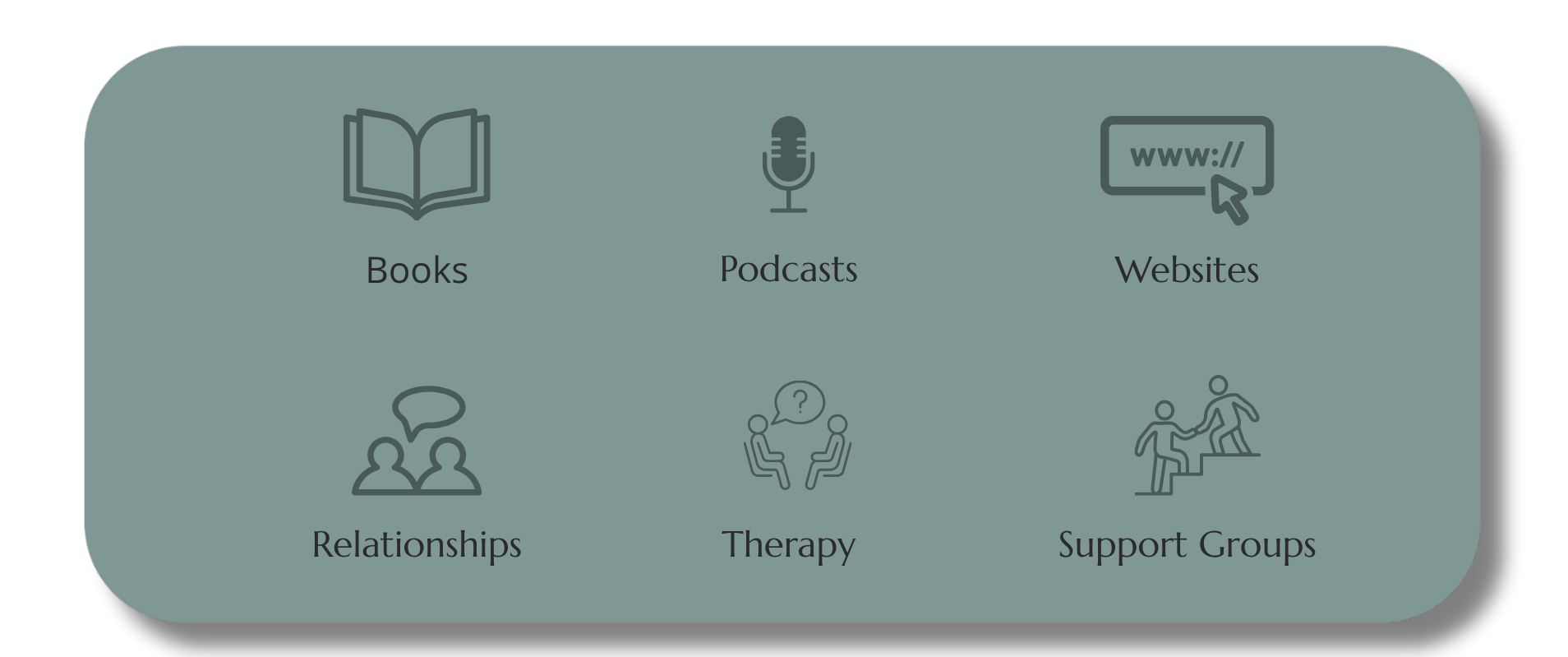
Information Sources
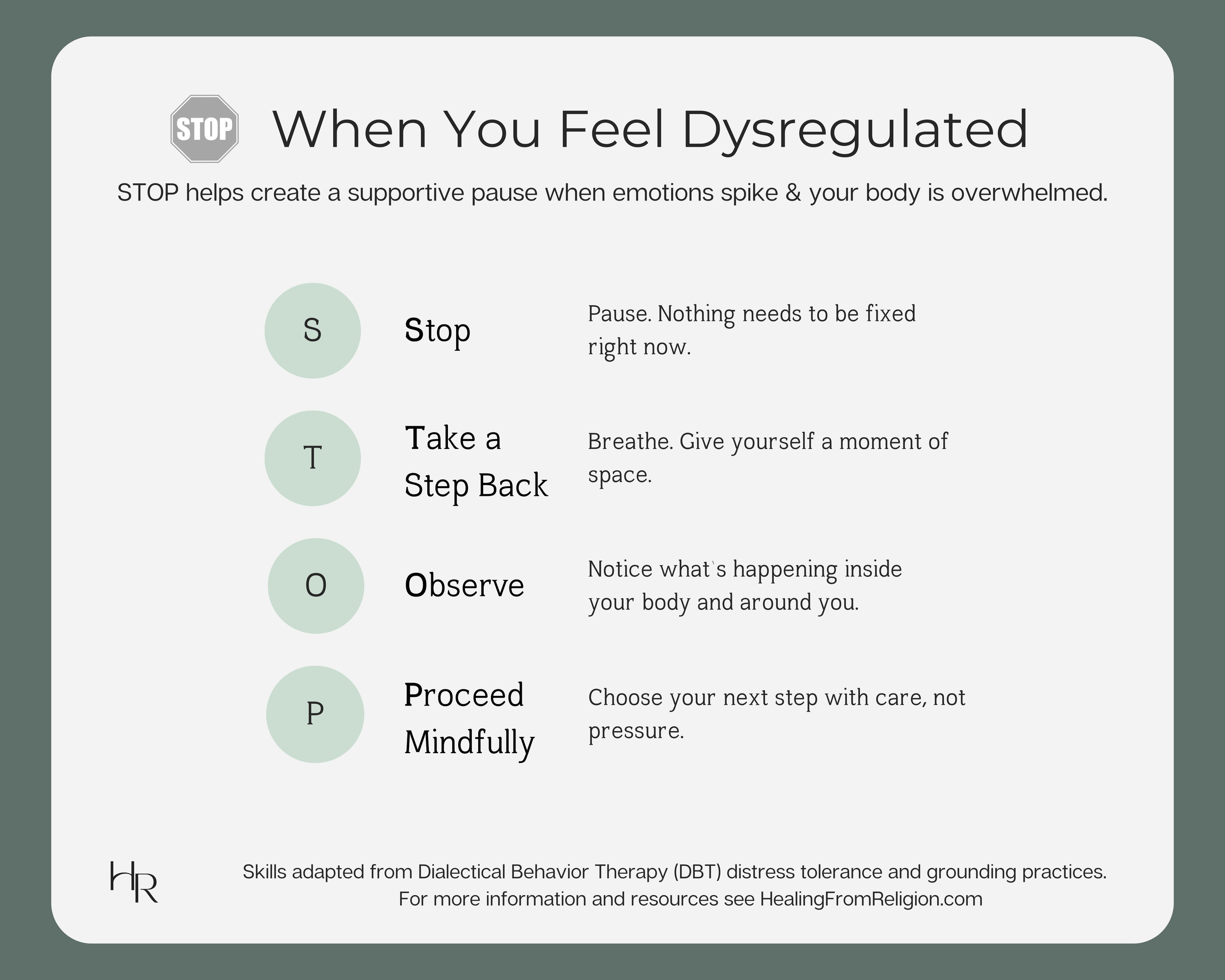
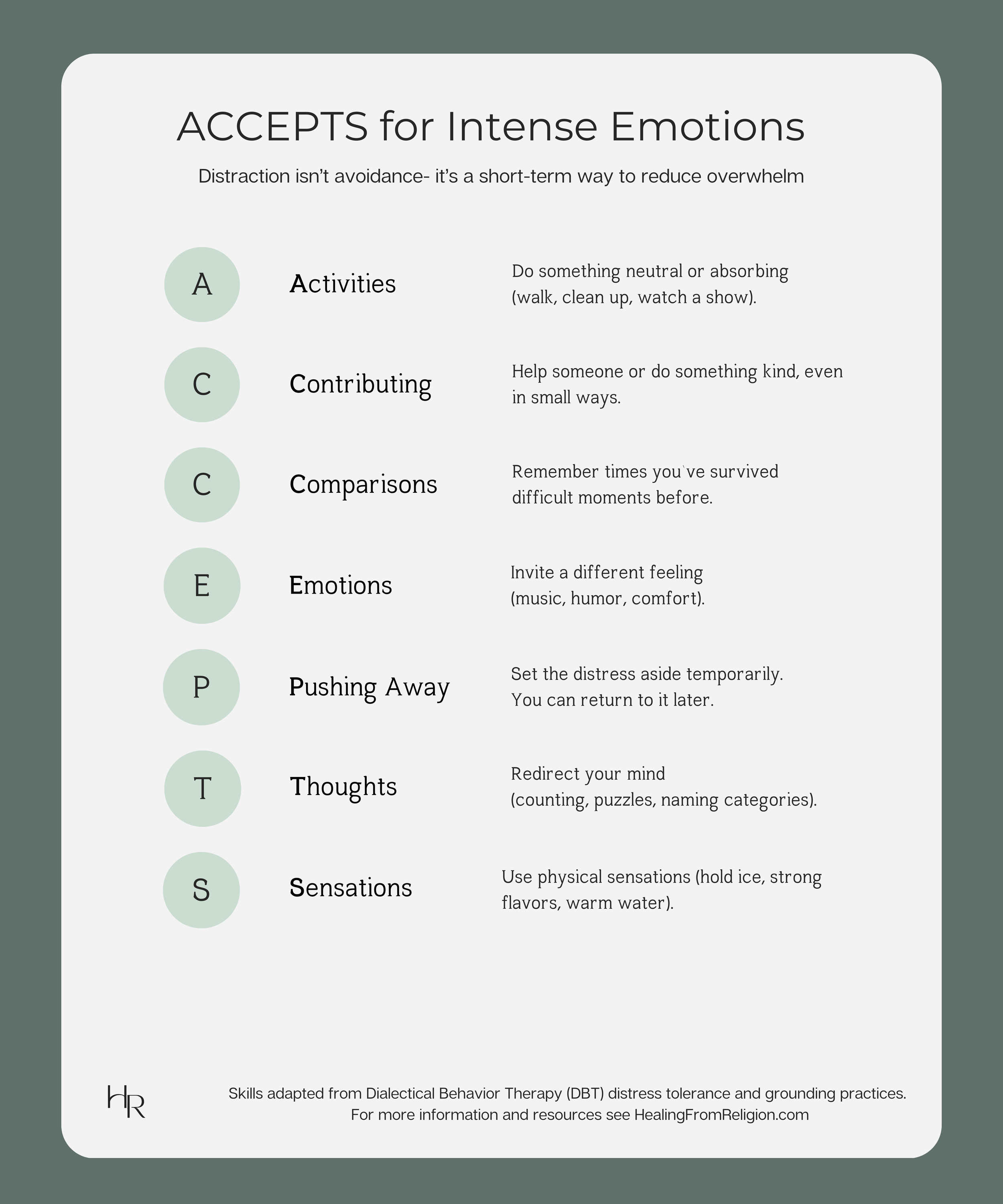
It’s okay to go slowly. Your brain can only take in so much at a time, and it often absorbs new information in small pieces over time. Taking breaks and saving material for later is not avoidance—it’s self-regulation. This is especially important if learning begins to feel overwhelming or interferes with your ability to function in daily life. Knowing when to turn off a podcast or close a book is a skill, not a failure. Practicing ways to return your body and mind to a calmer state is an essential part of the process.
As you take in new information, it can help to pause and check in with yourself. Is your body tense? Has your mood been completely taken over by what you’re consuming?
Your body still needs nourishment, movement, fresh air, and breaks from difficult material. You can’t live in heavy content; you can only visit.
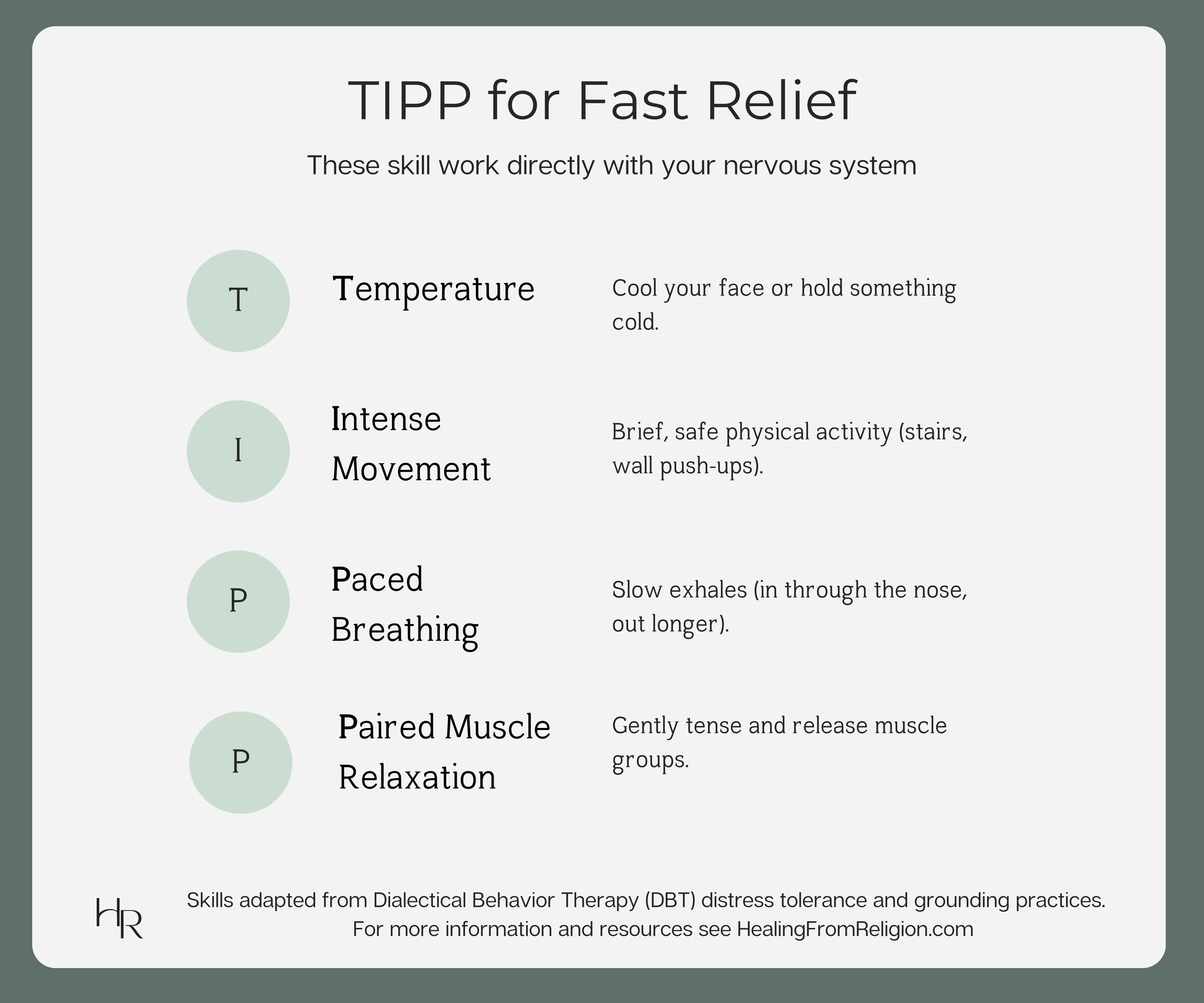
You don’t need every coping skill—just a few that work for you.
Dialectical Behavior Therapy (DBT) offers many practical grounding and coping skills that can help when you feel dysregulated. Some of these strategies may seem simple or unnecessary at first, but what matters most is finding a pace that both your body and your mind can tolerate. Sometimes the mind wants to keep going—learning more, connecting dots, searching for answers—while the body is signaling that it needs rest.