
Types of Religious Harm
There are many reasons why someone might be healing from religion.
While every person’s story is unique there are several types of harm that commonly occur.
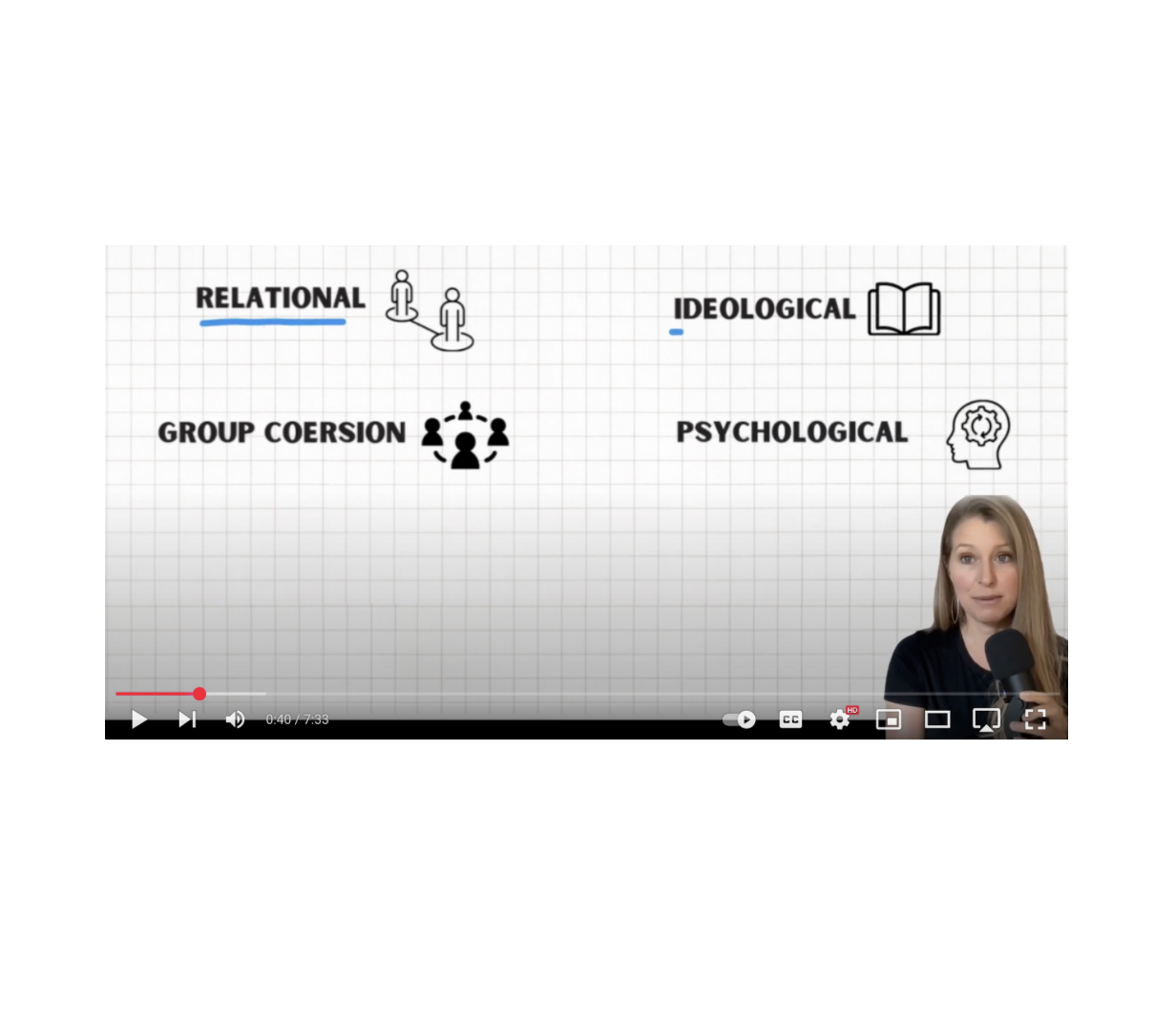
RELATIONAL HARM
When one person hurts another person in a religious context. This usually involves a power dynamic where one person is claiming religious authority. It could be authority from a religious text or from claims that God is speaking to them, etc. A widely understood version of religious relational harm is sexual abuse, but it also includes emotional abuse, financial exploitation, spiritual abuse, etc.
IDEOLOGICAL HARM
Belief systems or doctrines that negatively affect how someone sees themselves and the world around them.
Shame-based ideology focuses on the idea “You are not good”. Examples of shame-based teachings are that a person is sinful, fundamentally flawed, untrustworthy, broken, evil, etc. Shame based teachings tear down a person’s self worth. Purity culture falls under this category because it's rooted in the premise that inherent sexuality and/or gender expression is not good.
Fear-based ideology teaches that “You are not safe”. Ideology regarding satan, hell, being punished by God, or the violent ending of the world fall under this category. Fear based Us versus Them beliefs label outsiders as dangerous, evil, or inferior. Religious members may be warned about interacting with outsiders which often decreases access to important information, resources, social supports.
HIGH CONTROL GROUP STRUCTURE
Social dynamics that create a self-reinforcing system of psychological control. In high control groups it may appear that someone has free choice over their participation, but they are coerced by a sticky web of group dynamics. High control groups put an emphasis on obedience and conformity. They discourage doubts, warn against exposure to outside information, and instill fears about the consequences of departing from the group or its teaching. High control groups are skilled at recruitment that begins with a deceptive emphasis on being chosen and benevolent intentions for good. New members are targeted based on needs for social support, their desire for morality. The recruitment process often ends with demand for a high stake public commitment from a new individual which will culminate in an all in lifestyle and identity change. Pressures to decrease individuality and take on group identity repeat as new members are slowly transformed into self reinforcing group members who then repeat the process becoming an agent of recruitment themselves.
PSYCHOLOGICAL HARM
Internal distress at the level of a person’s thinking, feeling, and relationship to themselves. For example, in high control groups a person often has a very strong inner critic- a voice the is constantly self-policing their thoughts and their feelings. There can be a fracture of someone’s psychology between the “good religious self” and the “bad human self” which involves a constant self policing and increasing in severity. Psychological harms also include teaching someone to shut off messages from their body, their intuition and their emotions. It includes the phobia indoctrinations of fear based messaging and how that plays out in someone’s inner thought life, imagery, and physiology. Psychological harm is also known by the term: religious trauma.