
Healing from Religious Trauma
A roadmap for healing from religion

Leaving religion or questioning your faith can be one of the most disorienting experiences a person goes through. Many people experience anxiety, loss, identity confusion, and strained relationships during this process.
Healing from religious trauma is not a single step, but a gradual process of rebuilding safety, understanding, and a sense of self. This page offers a roadmap to help you make sense of what you’re experiencing and begin finding your way forward.
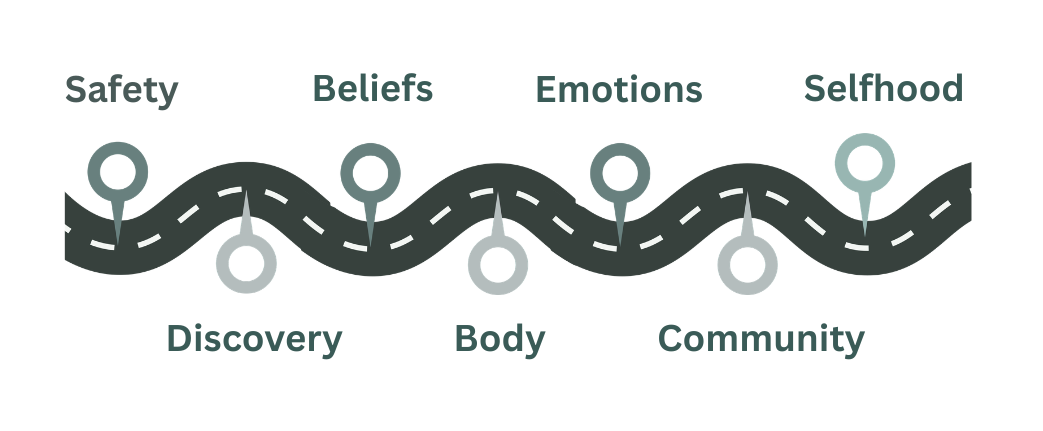
The Core Areas of Recovery
Healing from religion can take many forms, and each person’s journey will look different.
Still there are some common themes that come up along the way for most people.
Read more to see if any of these apply to you…
Safety:
The First Step in Recovery

Safety is the non-negotiable part of recovery and the first place to start.
Physical Safety
Ensuring that you and any children are out of immediate harm’s way is step one. This may include leaving abusive environments, creating distance from individuals who are physically or sexually abusive, and securing a space where you can breathe, think, and make decisions without fear.
Basic Needs
Safety also includes having access to food, stable shelter, medical care, and any other fundamental support necessary for physical and daily well-being.
Emotional Stabilization
Once safety and basic needs are in place, the focus shifts to emotional steadiness. This can involve crisis support, and determining whether higher levels of psychological or psychiatric care are needed.
Starting Resources for Support
Domestic & Sexual Violence
National Domestic
Violence Hotline
Call 1-800-799-SAFE (7233) or visit thehotline.org
RAINN (Rape, Abuse
& Incest National Network)
Call 1-800-656-HOPE (4673) or visit rainn.orginn.or
Mental Health Support
988 Suicide & Crisis Lifeline
Call or text 988, or chat at 988lifeline.org
Crisis Text Line
Text HOME to 741741 to connect with a trained crisis counselor
crisistextline.org
Basic Needs & Shelter
211 – United Way
Resource Line
Call 211 or visit 211.org for local help with food, housing, healthcare, and utilities.
National Runaway Safeline
Call 1-800-RUNAWAY
(786-2929) or chat at 1800runaway.org
Discovery:
Gaining New Information about Religious Beliefs

High-control religious groups restrict information from outside sources. Asking questions may be framed as a lack of faith, rebellion, or allowing harmful influences in. Once a person cracks opens that doorway to information, there is often a lot to take in. Learning can include everything from critical accounts of a particular religious group to pop culture references you were once discouraged from exploring.
Some people describe this period of discovery as a flood of information—energizing, overwhelming, and driven by a strong urge to uncover new realities. Learning new information can bring feelings of shock, anger, or grief especially when it challenges the credibility of a group or its leaders. You may begin to recognize that beliefs once presented as loving or true were in fact, harmful or false narratives. At times, the contrast between old teachings and new understanding can feel so stark that it resembles stepping into the Twilight Zone or waking up from the Matrix.
Common information topics include accounts of former group members, academic critiques of religious texts, learning about scandals by religious leaders, alternative religious perspectives and philosophies, learning about cults/high control groups dynamics/narcissistic abuse.
It’s okay to go slowly. Your brain can only take in so much at a time, and it often absorbs new information in small pieces over time. Taking breaks and saving material for later is not avoidance—it’s self-regulation. Are you needing some additional support for caring for yourself while learning new information? [Read more here →]
Recovering Beliefs:
Rebuilding Identity and Meaning
Healing from religion often involves multiple layers of belief, including our thinking patterns, core beliefs, and systems of meaning.
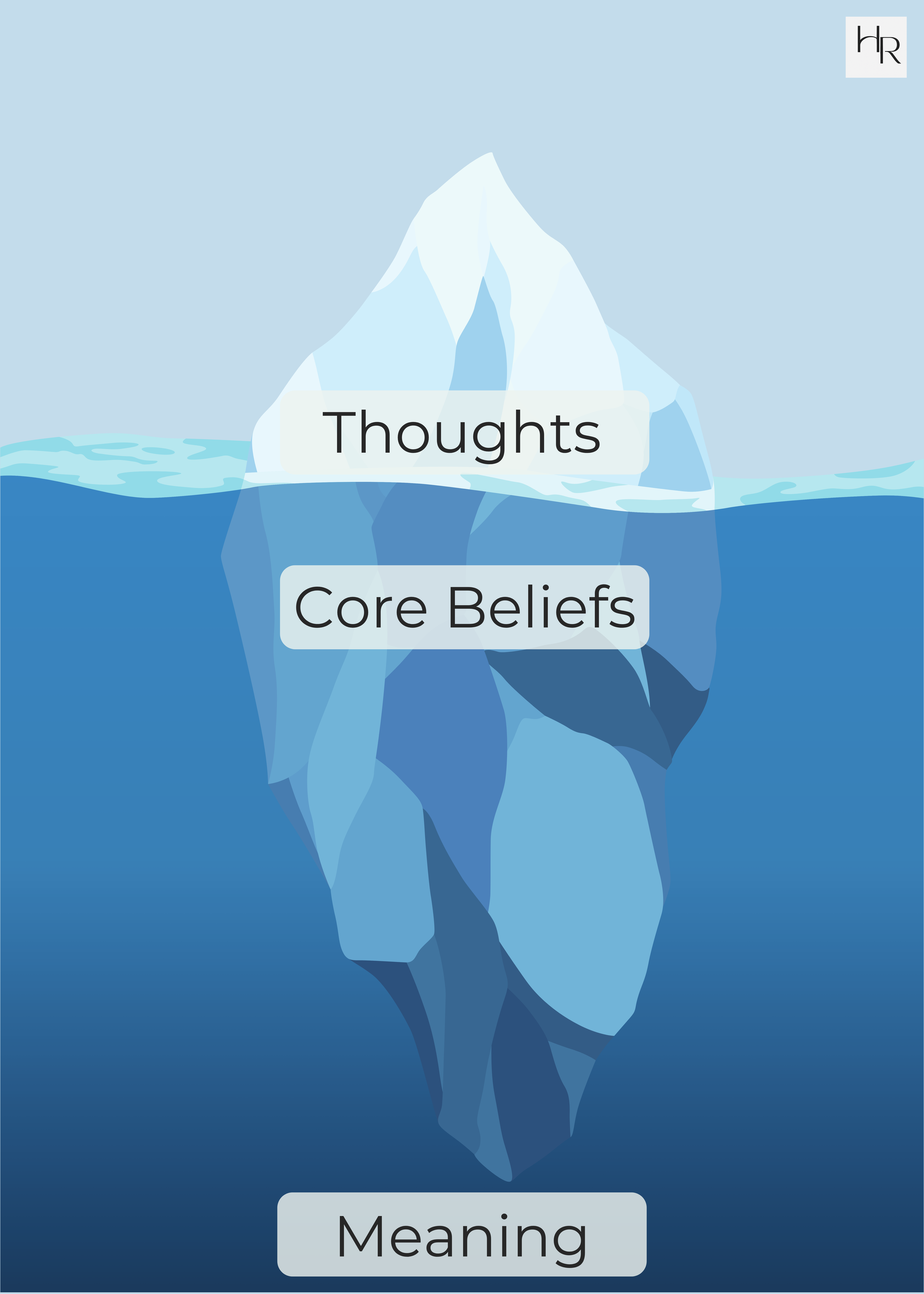
Thoughts include the dialogue and internal conversation we have all day long in our heads. The voice of the inner critic, the anxious worrier, or the optimistic problem solver are all examples of types of thinking patterns. Have you had old religious thoughts pop up even after you no longer believe them? You may be having intrusive thoughts (unwanted repetitive thoughts) [Read more here →]
Core Beliefs are the deep, often unspoken conclusions we form about ourselves, other people, and the world. They lie beneath the conscious surface of our thoughts — shaped by early learning and emotional experience and often wired into the nervous systems. Healing core beliefs involves requires reprocessing stored experiences and updating old conclusions at a deeper level. [Read more here →]
Systems of Meaning frame how you understand life, death, and the big why questions humans have grappled with for as long as we have existed. Rebuilding this orientation is essential for navigating life. [Read more here →]
Healing the Body After Religious Trauma:
Connecting to your physical self

Many religious environments teach us to distrust the body — that physical signals are misleading, desires must be controlled, and the body itself is something to be managed or overcome. These messages can leave us disconnected from one of our most important sources of information about ourselves. In early recovery from religious harm, it is common for input from the body to be overwhelming (overwhelming panic responses or completely shut down and numb). Healing in the physical body involves learning to recognize and trust what your body is communicating. The body speaks through physical sensations and nervous system responses — including fight, flight, and freeze reactions that were often activated in high-control religious environments. Learning to work with these responses, rather than against them, is a core part of recovery.
Connecting to the physical self also means reclaiming sexuality, one of the core aspects of personhood. Most high control religious groups place rigid, shame-based controls on sex. Purity culture, modesty rules, dating limitations, marriage restrictions, gender identity are examples of religious control over sexuality.
Processing Emotions After Religious Harm:
Learning to ride the waves

Healing from religion often brings powerful emotional waves — anger at those who misled you, sadness about lost time and harm done, and fear about what comes next or what leaving might cost you.
Many religious environments taught that emotions are untrustworthy or even sinful, training people to automatically suppress feelings before they could fully form. This leaves many people numbed and disconnected from their own emotional experience.
The good news is that feeling and processing emotions is a skill you can relearn. Emotions are body sensations tied to thoughts and experiences — and learning to let them crest and pass in a safe way is key to releasing the energy they hold. It starts simply: noticing how hunger feels, how tension shows up in your jaw or shoulders, and gradually building from there.
Rebuilding Community and Navigating Religious Connections:
Social dynamics through transitions

Few things make leaving religion more complicated than the reality that your entire social world may have been built inside it. Family relationships, friendships, and faith communities can all become strained or fractured when your beliefs change — and navigating those relationships while also grieving them is one of the harder parts of this journey.
This includes learning to manage mixed-faith relationships, renegotiating your role in your family of origin, and finding your footing in areas like parenting and dating when the old rulebook no longer applies.
The other side of that challenge is rebuilding. Unlike religious communities, secular community doesn't organize itself around you — it takes intention. Support groups, therapy, hobby communities, and social activities can all become building blocks for a new network, but it requires real effort to construct what you once had handed to you.
Reconnecting with Yourself (Identity and Selfhood):
Finding your way back home

Connecting With Yourself
One of the deepest wounds religion can leave is damage to your relationship with yourself. Shame-based and control-driven doctrines teach us to self-police, distrust our instincts, and fear our own inner world. Over time, you can become a stranger to yourself.
Part of rebuilding involves asking a hard question: if you were misled for so long, how can you trust your own judgment again? The answer isn't a quick fix — it's a gradual process of learning that you can make mistakes, recalibrate, and keep going. Self-compassion, explored through the work of researchers like Kristin Neff, is a powerful foundation for this.
Tools like parts work and inner child work can help you develop a warmer, more curious relationship with your inner landscape — replacing the inner critic with something more like an inner ally.
Ultimately, you are your own best resource. You are the one who holds your story, knows your deepest needs, and has the capacity to keep growing. Reconnecting to that truth is at the heart of this stage of healing.